The Difference Between Eau de Parfum, Eau de Toilette, and Perfume Oil
When shopping for fragrances, you may often see terms like Eau de Parfum (EDP), Eau de Toilette (EDT), and Perfume Oil written on perfume bottles. While these names might sound similar, they actually represent different types of fragrance formulations. The main difference between them lies in oil concentration, longevity, intensity, and overall fragrance experience.
Understanding these differences can help you choose the right fragrance based on your lifestyle, personal preference, and the occasion you plan to wear it for. Some people prefer light and refreshing scents for everyday use, while others enjoy deeper, long-lasting fragrances that stay noticeable throughout the day.
In this guide, we will explore the key differences between Eau de Parfum, Eau de Toilette, and Perfume Oil so you can choose the fragrance that suits you best.
Understanding Fragrance Concentration
Before diving into each type, it is important to understand fragrance concentration. Perfumes are made using a mixture of fragrance oils, alcohol, and water. The percentage of fragrance oil in the formula determines how strong and long-lasting the perfume will be.
Generally, the higher the concentration of fragrance oil, the stronger and longer-lasting the scent becomes.
Fragrance concentrations typically follow this structure:
- Eau de Toilette – lighter concentration
- Eau de Parfum – higher concentration
- Perfume Oil – pure or highly concentrated fragrance oils
Each category offers a different fragrance experience.
What Is Eau de Parfum (EDP)?
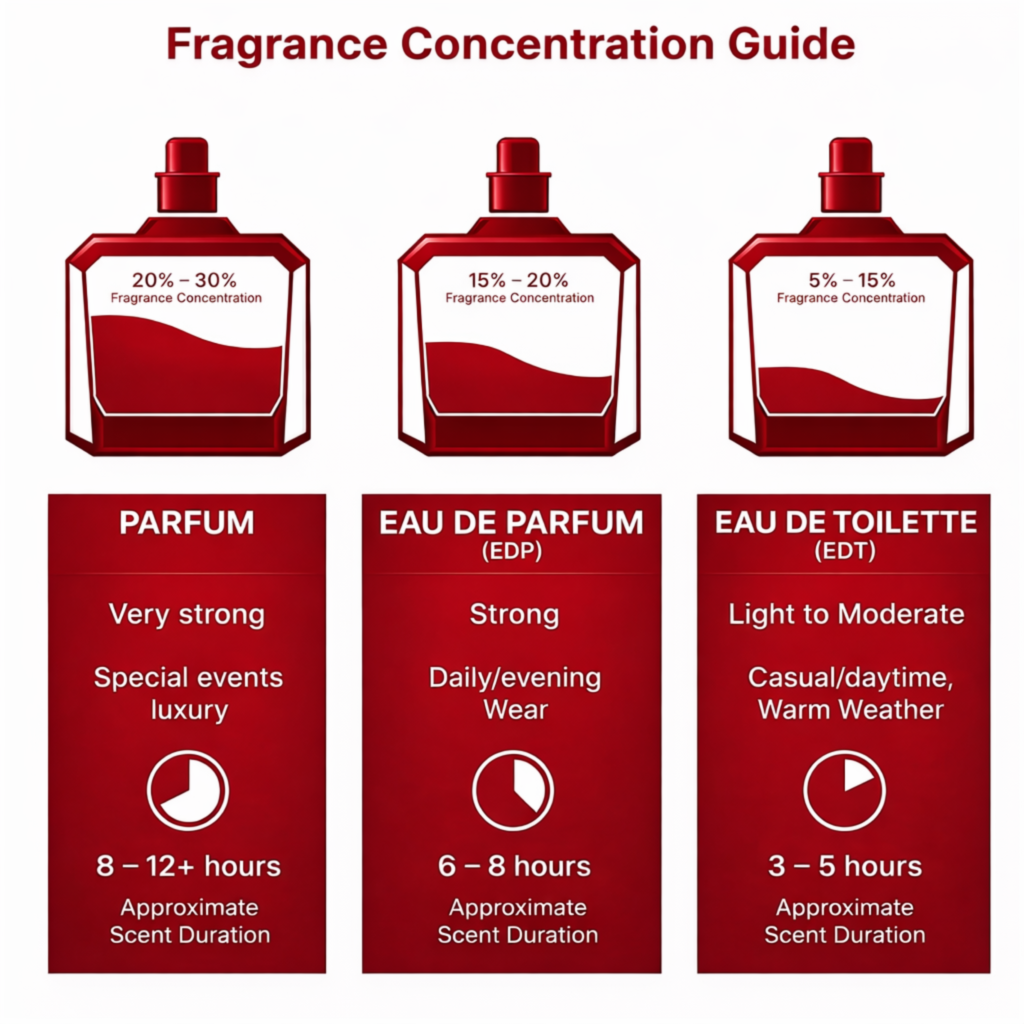
Eau de Parfum, commonly abbreviated as EDP, is one of the most popular types of perfumes available today. It contains a relatively high concentration of fragrance oils, typically between 15% and 20%.
Because of this higher oil concentration, Eau de Parfum fragrances tend to last longer than lighter perfume types. On average, an Eau de Parfum can last 6 to 8 hours, and sometimes even longer depending on the ingredients used.
Characteristics of Eau de Parfum
Eau de Parfum offers a balanced fragrance experience that combines longevity with comfort. It is strong enough to remain noticeable but not too overpowering for daily wear.
Key characteristics include:
- Rich and noticeable scent
- Long-lasting performance
- Balanced fragrance projection
- Suitable for both day and evening wear
Eau de Parfum is often considered the perfect middle ground between light and intense fragrances.
When to Use Eau de Parfum
Eau de Parfum works well for many situations, including:
- Office or work environments
- Social gatherings
- Dinner outings
- Everyday use
Because of its versatility, many premium fragrance brands choose Eau de Parfum as their primary formulation.
What Is Eau de Toilette (EDT)?
Eau de Toilette, commonly known as EDT, has a lighter concentration of fragrance oils compared to Eau de Parfum. The oil concentration usually ranges between 5% and 15%.
Due to this lower concentration, Eau de Toilette fragrances are lighter and more refreshing. They generally last around 3 to 5 hours, making them ideal for casual or daytime use.
Characteristics of Eau de Toilette
Eau de Toilette is designed to provide a fresh and subtle scent experience.
Common characteristics include:
- Light and airy fragrance
- Refreshing scent profile
- Shorter longevity
- Softer projection
Many people prefer Eau de Toilette during warm weather because lighter fragrances feel more comfortable in hot climates.
When to Use Eau de Toilette
Eau de Toilette is perfect for:
- Daytime wear
- Summer seasons
- Casual outings
- Gym or outdoor activities
It is a great choice for those who prefer subtle fragrances that are not too strong.
What Is Perfume Oil?
Perfume oil is a highly concentrated fragrance form that usually contains 20% to 40% fragrance oils or sometimes even more. Unlike traditional perfumes, perfume oils typically do not contain alcohol, which gives them a different scent experience.
Instead of evaporating quickly like alcohol-based fragrances, perfume oils stay close to the skin and develop gradually throughout the day.
Characteristics of Perfume Oil
Perfume oils are known for their luxurious and long-lasting properties.
Key characteristics include:
- Very high oil concentration
- Long-lasting fragrance
- Alcohol-free formulation
- Smooth and rich scent experience
- Soft projection close to the skin
Because they contain more fragrance oil, perfume oils can last 10 to 15 hours or longer.
When to Use Perfume Oil
Perfume oils are ideal for:
- Long days when you need lasting fragrance
- Evening events or special occasions
- People with sensitive skin who prefer alcohol-free fragrances
They are often associated with premium fragrance experiences.
Key Differences Between EDP, EDT, and Perfume Oil
Understanding the differences between these fragrance types can help you make the right choice.
1. Oil Concentration
The biggest difference between these fragrance types is the concentration of fragrance oils.
- Eau de Toilette: 5–15%
- Eau de Parfum: 15–20%
- Perfume Oil: 20–40%
Higher oil concentration usually results in stronger and longer-lasting fragrance.
2. Longevity
Longevity refers to how long the fragrance lasts on your skin.
- Eau de Toilette: 3–5 hours
- Eau de Parfum: 6–8 hours
- Perfume Oil: 10–15 hours
Perfume oils generally last the longest because they evaporate more slowly.
3. Projection
Projection refers to how far the fragrance spreads around you.
- Eau de Toilette: Light projection
- Eau de Parfum: Moderate projection
- Perfume Oil: Soft projection close to skin
Perfume oils are more intimate fragrances, while Eau de Parfum tends to create a stronger scent aura.
4. Price
Since perfume oils and Eau de Parfum contain higher fragrance concentrations, they are often priced higher than Eau de Toilette.
However, they may also last longer, meaning you need fewer applications.
How to Choose the Right Type of Fragrance
The best fragrance type depends on your lifestyle, preferences, and the situation where you plan to wear it.
Choose Eau de Toilette if:
- You prefer lighter scents
- You want a refreshing fragrance for daytime
- You live in a warm climate
- You enjoy subtle fragrances
Choose Eau de Parfum if:
- You want a fragrance that lasts longer
- You prefer a richer scent profile
- You need a versatile perfume for both day and night
- You want stronger projection
Choose Perfume Oil if:
- You want maximum longevity
- You prefer alcohol-free fragrances
- You enjoy deeper, richer scents
- You want a fragrance that develops slowly on your skin
Why Fragrance Quality Matters
While concentration is important, the quality of fragrance ingredients also plays a major role in the performance of a perfume.
High-quality ingredients help create:
- Smooth scent transitions
- Balanced fragrance notes
- Better longevity
- A more luxurious fragrance experience
Premium perfume brands carefully blend ingredients to ensure that the fragrance evolves beautifully from top notes to base notes.
The Fragrance Philosophy of Madscent
At Madscent, we believe that fragrance should be both long-lasting and memorable. Our perfumes are designed with carefully balanced oil concentrations to deliver a rich scent experience that stays with you throughout the day.
Whether you prefer the refined balance of Eau de Parfum, the refreshing feel of Eau de Toilette, or the luxurious intensity of Perfume Oil, choosing the right fragrance can elevate your personal style and confidence.
A great fragrance does more than just smell good—it becomes a signature part of who you are.
Final Thoughts
Understanding the difference between Eau de Parfum, Eau de Toilette, and Perfume Oil can help you choose the perfect fragrance for your needs.
Each type offers its own advantages:
- Eau de Toilette provides light and refreshing scents.
- Eau de Parfum delivers balanced longevity and richness.
- Perfume Oil offers deep, long-lasting fragrance.
The right choice depends on your personal preference, lifestyle, and the kind of fragrance experience you want.
When you choose a fragrance that suits your personality and daily routine, it becomes more than just a scent—it becomes part of your identity.
And with the right perfume, you can leave a lasting impression wherever you go.